

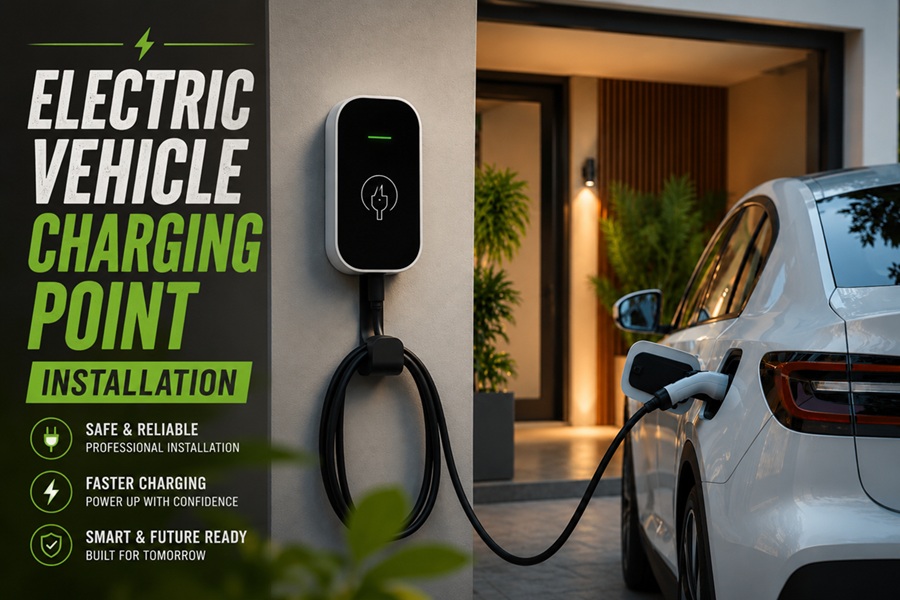
Electric vehicle charging point installation is the process of fitting a dedicated EV charger and its electrical supply at a home or business, and it involves assessing your electrical system, choosing the right charger, installing a dedicated circuit, mounting and connecting the unit, and meeting permit and inspection requirements. The scope depends largely on the charger level, since a faster Level 2 charging point requires a dedicated higher-power circuit and professional installation, unlike simply plugging into a standard outlet. A proper installation ensures the charging point is safe, compliant with electrical code, and able to charge your vehicle reliably. Because it centers on electrical work, charging point installation is generally a job for a qualified professional, and understanding what it involves helps you plan the project and know what to expect.
Installing a dedicated charging point transforms EV ownership, giving you convenient, faster charging where you park. But it is more involved than many people expect, touching on your electrical capacity, charger choice, permits, and safe installation. This guide walks through what electric vehicle charging point installation involves, from assessing your setup and choosing a charger to the installation process and key considerations, so you know what to expect.
| What it is | Fitting a dedicated EV charger and supply |
| Key factor | The charger level you choose |
| Level 2 | Needs a dedicated higher-power circuit |
| Involves | Assessment, wiring, mounting, and connection |
| Also requires | Permits and inspection where applicable |
| Best done by | A qualified professional |
| Result | A safe, compliant, reliable charging point |
| Plan around | Your electrical capacity and location |
Charging Levels and What They Mean
The first thing to understand about charging point installation is the charging level, because it largely determines what the installation involves. EV charging generally comes in levels that differ in speed and electrical requirements, and the level you choose shapes the whole project.
| Level | Speed | Installation |
| Level 1 | Slowest, uses a standard outlet | Minimal; plugs into a regular outlet |
| Level 2 | Much faster home and business charging | Needs a dedicated higher-power circuit |
| Commercial / DC fast | Fastest, for public and commercial use | Major infrastructure, professional install |
Most home charging point installations involve a Level 2 charger, which charges far faster than a standard outlet but requires a dedicated circuit and professional installation, which is the focus of a typical charging point project.
Assessing Your Electrical System
A crucial early step in charging point installation is assessing your electrical system, since the charger draws significant power and your setup must be able to support it. A professional evaluates your electrical panel’s capacity to determine whether it can handle the additional load of an EV charger, or whether an upgrade is needed. They also consider the location for the charging point and the distance from the panel, which affects the wiring run. This assessment is important because adding a high-power charger to an inadequate electrical system is unsafe, so confirming your system can support the charger, or upgrading it, is a foundational part of the installation. The findings shape the scope, cost, and requirements of the project.
The Installation Process
Once the charger is chosen and the electrical system assessed, the installation itself follows a general process, carried out by a qualified professional. Knowing the typical steps helps you understand the project.
- Assess the electrical panel and confirm it can support the charger, upgrading if needed.
- Obtain any required permits before beginning the work.
- Install a dedicated circuit from the electrical panel to the charging point location.
- Mount the charging unit securely in the chosen location.
- Connect and wire the charger correctly and to code.
- Test the charging point and arrange any required inspection.
Throughout, the work must follow electrical code and safety requirements, which is why professional installation is important for a safe, compliant charging point.
Permits and Inspection
An important part of charging point installation that is easy to overlook is permits and inspection, which help ensure the work is safe and compliant. Many areas require a permit for the electrical work involved in installing an EV charging point, and the completed installation may need to pass an inspection to confirm it meets code. A qualified contractor typically handles obtaining the necessary permits and arranging inspection as part of the job. This matters because proper permitting and inspection protect your safety, ensure the installation is done correctly, and can be important for insurance and when selling your property. Skipping these steps to save time or money is risky, so having the work permitted and inspected as required is part of a proper installation.
Key Considerations
Beyond the core process, several considerations help you plan a charging point installation that fits your needs. Thinking through these in advance leads to a better result.
- The charger level and speed you need for your vehicle and usage
- Where to locate the charging point for convenience and a shorter wiring run
- Whether your electrical panel can support the charger or needs upgrading
- The charger features you want, such as connectivity or scheduling
- Permits, inspection, and code requirements in your area
- The total cost, including any electrical upgrades and the charger itself
Frequently Asked Questions
What is involved in installing an EV charging point?
It involves assessing your electrical system, choosing the charger, obtaining permits, installing a dedicated circuit from the panel to the charger location, mounting and wiring the unit to code, and testing and inspecting it. A Level 2 charging point requires professional installation.
Do I need a dedicated circuit for an EV charger?
A Level 2 charging point, the common choice for faster home charging, requires a dedicated higher-power circuit installed from your electrical panel. A Level 1 charger can use a standard outlet but charges much more slowly. The dedicated circuit is part of a proper Level 2 installation.
Do I need a permit to install an EV charging point?
Many areas require a permit for the electrical work involved, and the installation may need to pass inspection to confirm it meets code. A qualified contractor typically handles permits and inspection, which protect your safety and ensure the work is done correctly.
Can my electrical panel handle an EV charger?
It depends on your panel’s capacity and existing load. A professional assesses whether your panel can support the charger’s added demand or whether an upgrade is needed. Confirming this is a foundational step, since adding a high-power charger to an inadequate system is unsafe.
Is a Level 2 charger worth installing at home?
For most EV owners, yes. A Level 2 charging point charges far faster than a standard outlet, making home charging convenient enough to top up overnight. It requires a dedicated circuit and professional installation, but the added speed and convenience are worth it for daily driving.
Home vs Business Installations
While the core of charging point installation is similar everywhere, home and business installations differ in scale and considerations, so it helps to understand which applies to your situation. Recognizing the differences helps you plan appropriately.
A home charging point installation typically involves a single Level 2 charger and a dedicated circuit, focused on convenient overnight charging for one or two vehicles. The main considerations are your home’s electrical capacity, the charger location, and the wiring run from your panel. A business or workplace installation, by contrast, may involve multiple charging points, greater electrical demand, and considerations like access, payment or usage management, and future expansion, making it a larger and more complex project.
Because of these differences, larger commercial installations generally require contractors experienced at that scale, while a home installation is well suited to a qualified residential EV installer or electrician. Whichever applies, the fundamentals of a safe, code-compliant installation with a proper dedicated supply remain the same, but planning around the scale and specific needs of a home versus a business ensures the charging point installation fits its intended use.
- Home: typically a single Level 2 charger and dedicated circuit
- Home considerations: panel capacity, location, and wiring run
- Business: often multiple points and greater electrical demand
- Business considerations: access, usage management, and expansion
- Match the contractor’s experience to the scale of the project
Final Thoughts
Electric vehicle charging point installation is the process of fitting a dedicated charger and electrical supply so you can charge conveniently and, with a Level 2 charger, much faster than a standard outlet. It involves assessing your electrical system, installing a dedicated circuit, mounting and wiring the unit to code, and meeting permit and inspection requirements, which is why it is generally a job for a qualified professional. Understanding the levels, the process, and the key considerations helps you plan the project and know what to expect, so you end up with a safe, compliant, and reliable charging point that makes EV ownership far more convenient.