

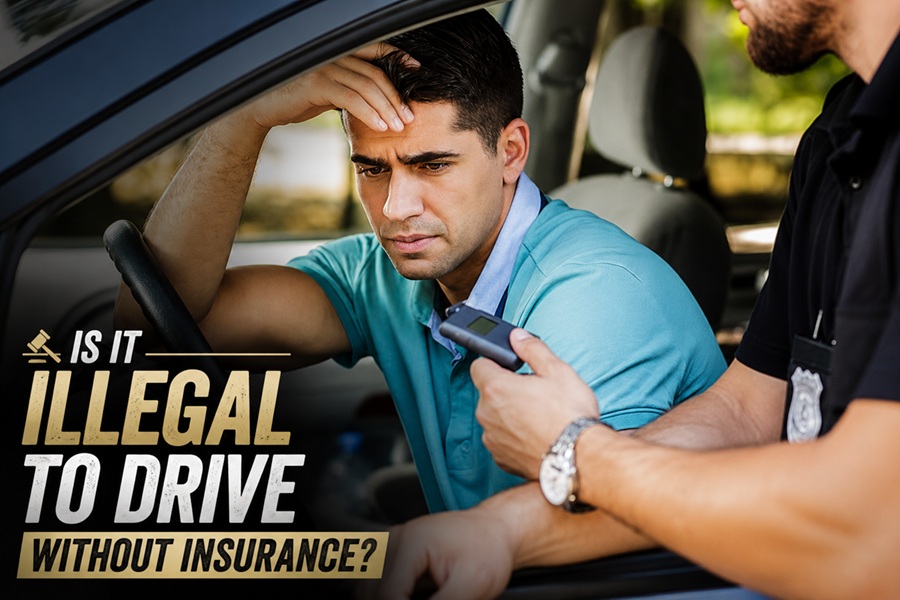
In nearly all places, yes, it is illegal to drive without at least the minimum car insurance required by law, and doing so can lead to serious penalties such as fines, license and registration suspension, vehicle impoundment, and legal and financial liability if you cause an accident. Most jurisdictions require drivers to carry at least a minimum level of insurance, usually liability coverage, to ensure they can cover harm they might cause to others, and driving uninsured breaks these laws. However, the specific requirements, penalties, and any exceptions vary by location, so the exact rules where you drive matter. This overview explains why insurance is required and the general consequences of driving without it, but you should always verify the specific laws in your area, and this is not legal advice.
Car insurance is one of those things almost every driver needs, but many wonder exactly what the law requires and what happens if they drive without it. The short answer is that driving uninsured is generally illegal and risky, though the specifics depend on where you are. This article explains why insurance is legally required, what typically happens if you drive without it, and why the rules vary, so you understand the general picture, with the important caveat to check your local laws.
| General answer | Yes, it is illegal in nearly all places |
| What is required | At least the minimum insurance, usually liability |
| Why | To cover harm you might cause to others |
| Penalties | Fines, suspension, impoundment, and more |
| If at fault uninsured | Serious personal financial liability |
| Varies by | Location, with different rules and penalties |
| Always | Verify the specific laws where you drive |
| Note | This is general information, not legal advice |
Why Insurance Is Legally Required
To understand why driving without insurance is illegal, it helps to understand why insurance is required in the first place. The core reason is financial responsibility: driving carries the risk of causing harm to other people and their property, and insurance ensures a driver can cover that harm rather than leaving victims without recourse.
Most places require drivers to carry at least a minimum level of insurance, typically liability coverage, which pays for injury or damage the insured driver causes to others. By requiring this, the law ensures that if you cause an accident, there is coverage to help those you harmed. Driving without insurance undermines this system, which is why it is against the law. The requirement is fundamentally about protecting others on the road and ensuring drivers can meet their financial responsibilities when accidents happen.
The General Consequences
Driving without insurance can carry a range of penalties, and while the specifics vary by location, the general consequences can be serious. Understanding the potential penalties underscores why driving uninsured is a bad idea.
- Fines, which can be substantial and increase for repeat offenses
- Suspension of your driver’s license
- Suspension of your vehicle registration
- Impoundment of your vehicle in some cases
- Points on your driving record or other administrative penalties
- Requirements to file proof of insurance for a period afterward
- Difficulty or higher costs obtaining insurance in the future
The Risk of an Accident While Uninsured
Beyond the legal penalties, one of the most serious risks of driving without insurance is what happens if you cause an accident while uninsured. In that situation, you can be held personally responsible for the costs of the injuries and damage you cause, which can be enormous. Without insurance to cover these costs, you could face significant personal financial liability, potentially including lawsuits, wage garnishment, or other measures to recover the damages. This is often the most financially devastating consequence of driving uninsured, far exceeding the fines. It highlights that insurance is not just a legal box to check but genuine financial protection, both for others and for yourself, since an accident without coverage can have life-altering financial consequences.
Why the Rules Vary
An important point to understand is that the specific insurance requirements and penalties for driving without insurance vary depending on where you are. Different jurisdictions set their own rules about the minimum coverage required, the exact penalties for driving uninsured, and how those penalties are applied, and some places may have particular provisions or alternatives to standard insurance. This variation is why it is essential to know the specific laws where you drive rather than assuming a single universal rule. What is required and what penalties apply in one location may differ elsewhere. Because of this, while the general principle, that driving without required insurance is illegal and risky, holds broadly, the precise details depend on your location, and you should always confirm the current requirements that apply to you.
Frequently Asked Questions
Is it illegal to drive without car insurance?
In nearly all places, yes. Most jurisdictions require at least a minimum level of insurance, usually liability coverage, and driving without it is illegal and can bring penalties. The specific requirements and penalties vary by location, so check the laws where you drive.
What happens if you drive without insurance?
Consequences can include fines, license and registration suspension, vehicle impoundment, and other penalties, plus serious personal financial liability if you cause an accident while uninsured. The exact penalties vary by location, but driving uninsured carries real risks.
Why is car insurance required by law?
It is required for financial responsibility, ensuring drivers can cover harm they cause to others. Minimum liability coverage means that if you cause an accident, there is coverage to help those you injure or whose property you damage, protecting others on the road.
Do insurance laws vary by location?
Yes. The minimum coverage required, the penalties for driving uninsured, and any special provisions vary by jurisdiction. This is why you should verify the specific insurance laws that apply where you drive rather than assuming a single universal rule.
What is the minimum insurance I need to drive legally?
Most places require at least a minimum level of liability insurance, which covers injury or damage you cause to others, though the exact minimum varies by jurisdiction. Some drivers choose more than the minimum for better protection. Confirm the specific requirements where you drive.
Can my license be suspended for driving without insurance?
In many jurisdictions, yes, driving without required insurance can lead to license suspension, along with fines, registration suspension, and other penalties. The specific consequences vary by location, so check the rules that apply where you drive.
How to Make Sure You Are Properly Covered
Since driving without required insurance is illegal and risky, the practical takeaway is to make sure you are always properly covered, which is straightforward with a little diligence. Staying insured protects you legally and financially, and it is far easier than dealing with the consequences of driving uninsured.
Carry at least the minimum insurance required where you drive, and ideally consider whether more than the minimum coverage makes sense for your protection, since minimum liability may not cover everything in a serious accident. Keep your policy active and avoid lapses, since even a gap in coverage can leave you driving uninsured without realizing it, and pay your premiums on time to prevent cancellation. Keep proof of insurance in your vehicle as required.
It is also wise to review your coverage periodically to ensure it still meets legal requirements and your needs, especially if you move, since requirements vary by location. If cost is a concern, shopping around and comparing insurers can help you find affordable coverage rather than going without. Staying properly and continuously insured is the simple, responsible way to avoid the legal and financial risks of driving uninsured, and to make sure you and others are protected on the road.
- Carry at least the minimum insurance required where you drive
- Consider more than the minimum for better protection
- Keep your policy active and avoid coverage lapses
- Keep proof of insurance in your vehicle as required
- Review your coverage periodically, especially if you move
Final Thoughts
So, is it illegal to drive without insurance? In nearly all places, yes, since most jurisdictions require at least minimum insurance, usually liability, and driving uninsured can bring penalties like fines, license and registration suspension, and impoundment, plus serious personal liability if you cause an accident. Insurance exists for financial responsibility, protecting others and yourself. Because the specific requirements and penalties vary by location, always confirm the laws that apply where you drive. This overview is general information to help you understand the picture, not legal advice, so consult the appropriate authorities or a professional for your specific situation.